
Getting here
Sodwana Bay sits on the Maputaland coast in the far north-east of KwaZulu-Natal, where the warm Agulhas Current sweeps down from the tropics.
Warm ocean conditions here help sustain coral reefs, which is how a small bay behind a big dune became a long-established dive destination.
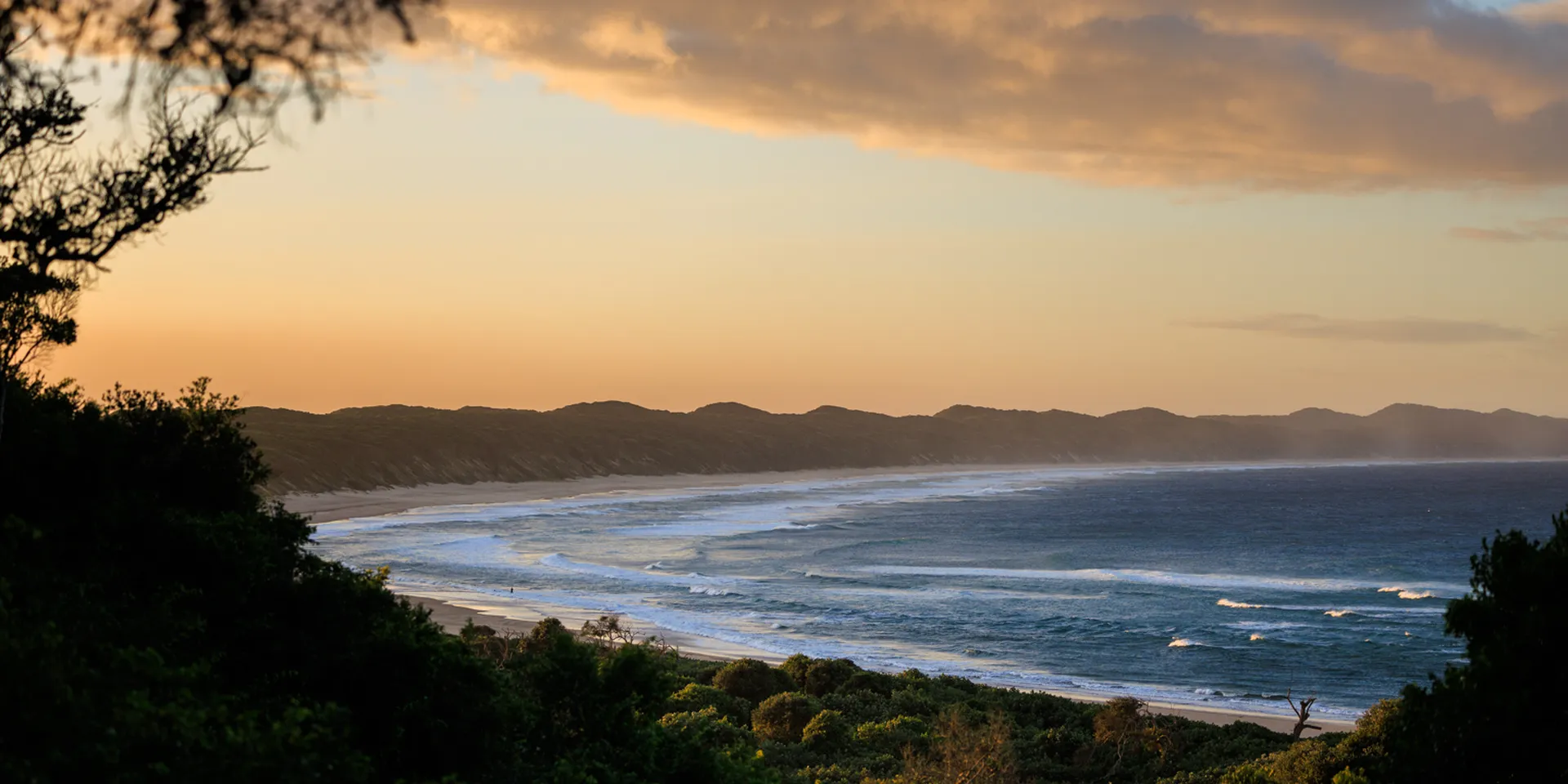
You do not have to put your head underwater to love it. Above the surface, Sodwana is kilometres of clean beach, an active launch beach full of dive boats at dawn, high forested dunes and a marine reserve.
In summer the beaches host nesting turtles; in winter, humpback whales pass offshore. Whether you come to dive, to fish, to camp with the family or simply to breathe, this coast delivers.
Where it is
Sodwana Bay lies inside the iSimangaliso Wetland Park, north of St Lucia and south of Kosi Bay, on the Elephant Coast. The nearest town is Mbazwana, and the drive up from Durban and King Shaka International Airport takes roughly four to four-and-a-half hours, which makes for both an easy long weekend and a proper dive holiday.
Getting there
Good news first: you do not need a 4x4 vehicle to reach camp. From the N2, turn off towards Hluhluwe and follow the paved R22 road through Mbazwana to Sodwana Bay.
The last stretch runs into the park, so ordinary gate times and entry fees apply. A standard car will get you and your gear all the way in; you only want higher clearance if you plan to explore the wilder routes to the north.
If you are towing a boat, Sodwana is set up for it, with a launch beach and the facilities to match.
Before you set off
- Vehicle: a standard car is fine to reach camp. A 4x4 vehicle is only needed for the northern coastal tracks and beach driving
- Boats: Sodwana has a beach launch site; check current launch rules and permits before you come
Under the water: the reefs
The diving is why Sodwana is famous, and it earns it. The reefs are named for their distance up the coast from the launch, from the shallow, sheltered Two-Mile Reef, perfect for beginners and snorkellers, to the deeper, wilder reefs further north for experienced divers.
They are alive with soft and hard corals, clouds of reef fish, turtles, rays and the occasional passing shark. In the warm months the big visitors arrive: whale sharks, manta rays and, for the lucky few, the odd hammerhead.
Above the water: the coast and its wildlife
Sodwana’s beaches run for miles, backed by dune forest, and are largely empty once you walk away from the launch. From November to March, loggerhead and leatherback turtles haul up these beaches at night to nest, and later in the season the hatchlings make their scramble to the sea.
From June to November, humpback whales pass close inshore on their winter migration. Between the big events there is superb birding in the coastal forest, and rock and surf angling for those who would rather fish from the sand.
Worth the wider trip
- Lake Sibaya: just inland lies Lake Sibaya, Southern Africa’s largest natural freshwater lake, home to hippo and crocodiles and a wealth of waterbirds, a peaceful counterpoint to the ocean
- The Maputaland coast, north and south: Sodwana is the busy heart of a wild coastline. To the north lie the remote beaches of Mabibi and, further still, Kosi Bay near the Mozambique border; to the south, St Lucia and Cape Vidal. It is a coast worth exploring slowly
A place worth protecting
All of this sits inside iSimangaliso Wetland Park, listed in 1999 as South Africa's first UNESCO World Heritage Site, and the reefs fall within a marine protected area. Staying at Sodwana makes you a guest in that story, and there is more on what it means, and how we all help keep it, on our heritage page.
In short
Warm water, world-class reefs, a proper launch site and long empty beaches, a straightforward paved drive from Durban with no 4x4 vehicle needed. Come to dive, and find there is a great deal more to do and see.